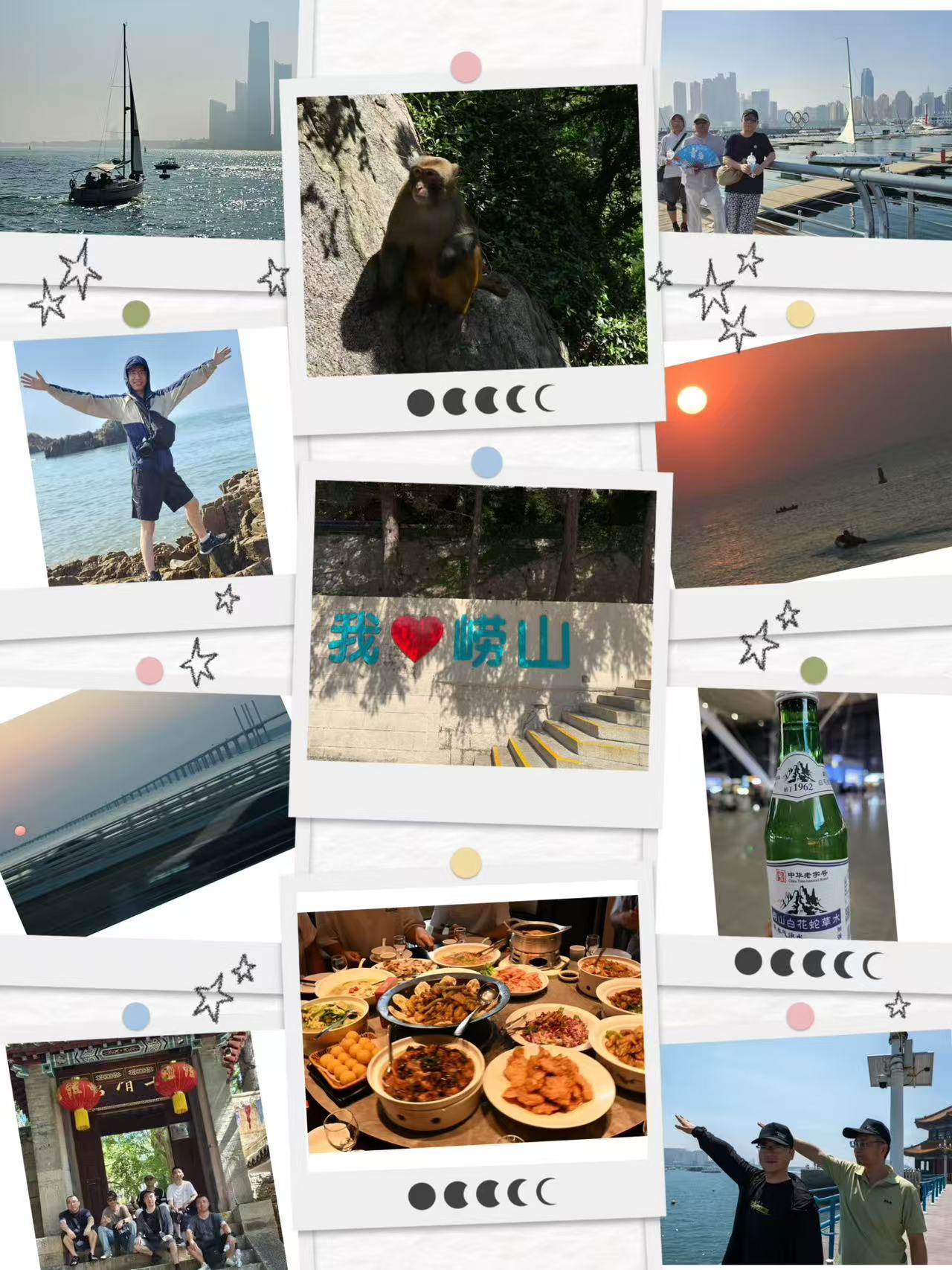



In July and August, Qingdao’s sea breeze carries a faint saltiness. Though the sun is fierce, it is tempered perfectly by the cool wind from the sea. In just a few days, it felt as though I had taken in all of Qingdao’s history, daily life, and romance.
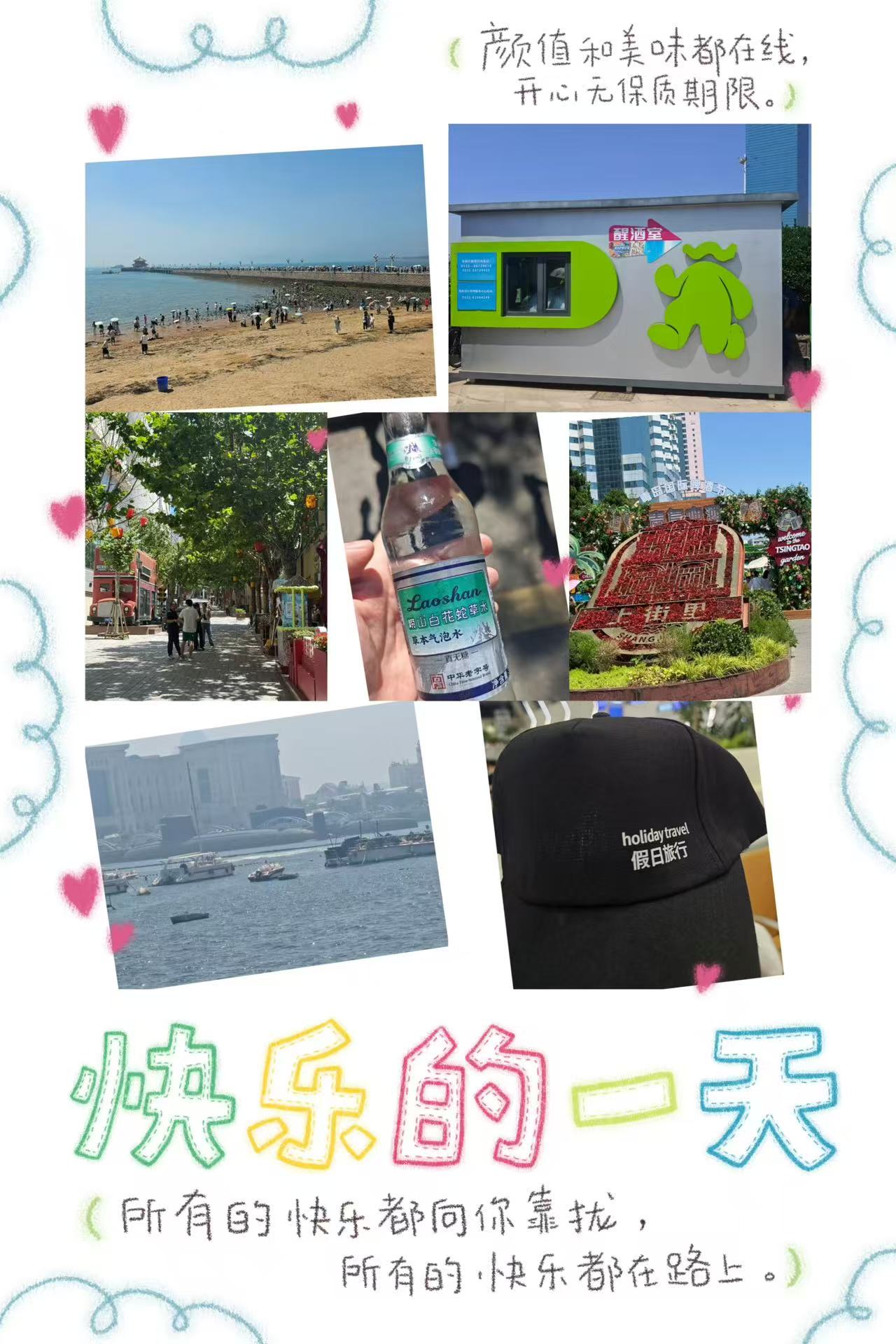
July 30 – starting with the old town.We headed straight to Zhanqiao Pier in the morning. The long stone bridge stretches into the sea, and at its end the Huilan Pavilion stands quietly in the morning light. Seagulls circled around the bridge; when someone scattered breadcrumbs, they fluttered and scrambled for them, their wings beating against the sound of the waves—lively yet gentle. Standing there for a while, I thought this place is like Qingdao’s living room, where every visitor first sits down and says hello.
Leaving the seaside, we turned into the old city. Guangxing Li was tucked away in an unremarkable alley. Pushing open the door, I was immediately captivated—a classic liyuan courtyard building, enclosed on four sides with red wooden corridors and a square patio in the middle bathed in sunlight. It is said to be the largest single-courtyard liyuan in Qingdao, designed by Germans and funded by a Cantonese merchant over a hundred years ago—a charming blend of Chinese and Western styles. Now renovated and tidy, it houses creative shops and cafés. I sat for a while on a bench in the patio, imagining the people who once lived here, hanging out laundry and chatting in the courtyard.
By the time we came out of Guangxing Li, it was almost noon. After lunch, we climbed Xiaoyu Hill—only sixty meters high, but the view from the Lanchao Pavilion at the top was superb. Looking south, Zhanqiao, Little Qingdao, and Huiquan Bay lined up in a row, with red rooftops layered one upon another and green trees nestled between them, like a hand‑colored print. The sea was calm, dotted with a few sailboats as if brushed in by an artist. I let the sea breeze wash over me from the pavilion, my mind empty and at ease. Coming down, we stopped by the University Road “Internet‑famous” wall on the way. The Forbidden‑City‑red wall with golden glazed tiles, and the two street signs—“University Road” and “Yushan Road”—at the corner were packed with people. Youngsters queued up for photos; we joined the fun and grabbed a gap. The wall itself wasn’t much, but the youthful, vibrant atmosphere was infectious, as if everyone wanted to leave a little mark there.
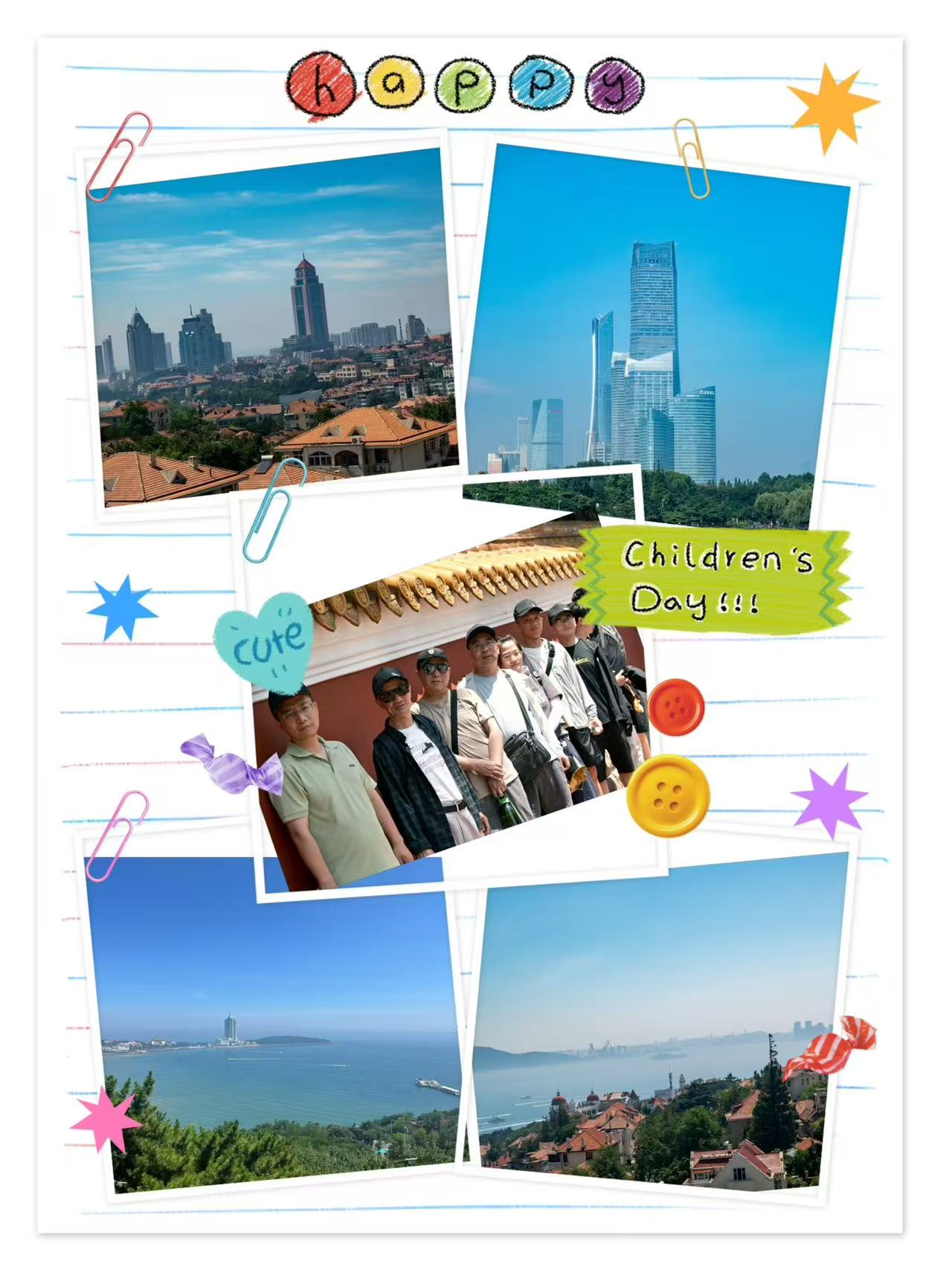
Towards evening we drove to Badaguan, just when the light was at its most beautiful. The streets, named after eight passes, crisscross the area, with different trees lining each road—plane trees, ginkgoes, cedars—so every street offered a different shade of green, making us slow our steps. Huashi Lou glowed a warm beige in the setting sun, and the Princess Building looked like a fairy‑tale castle.
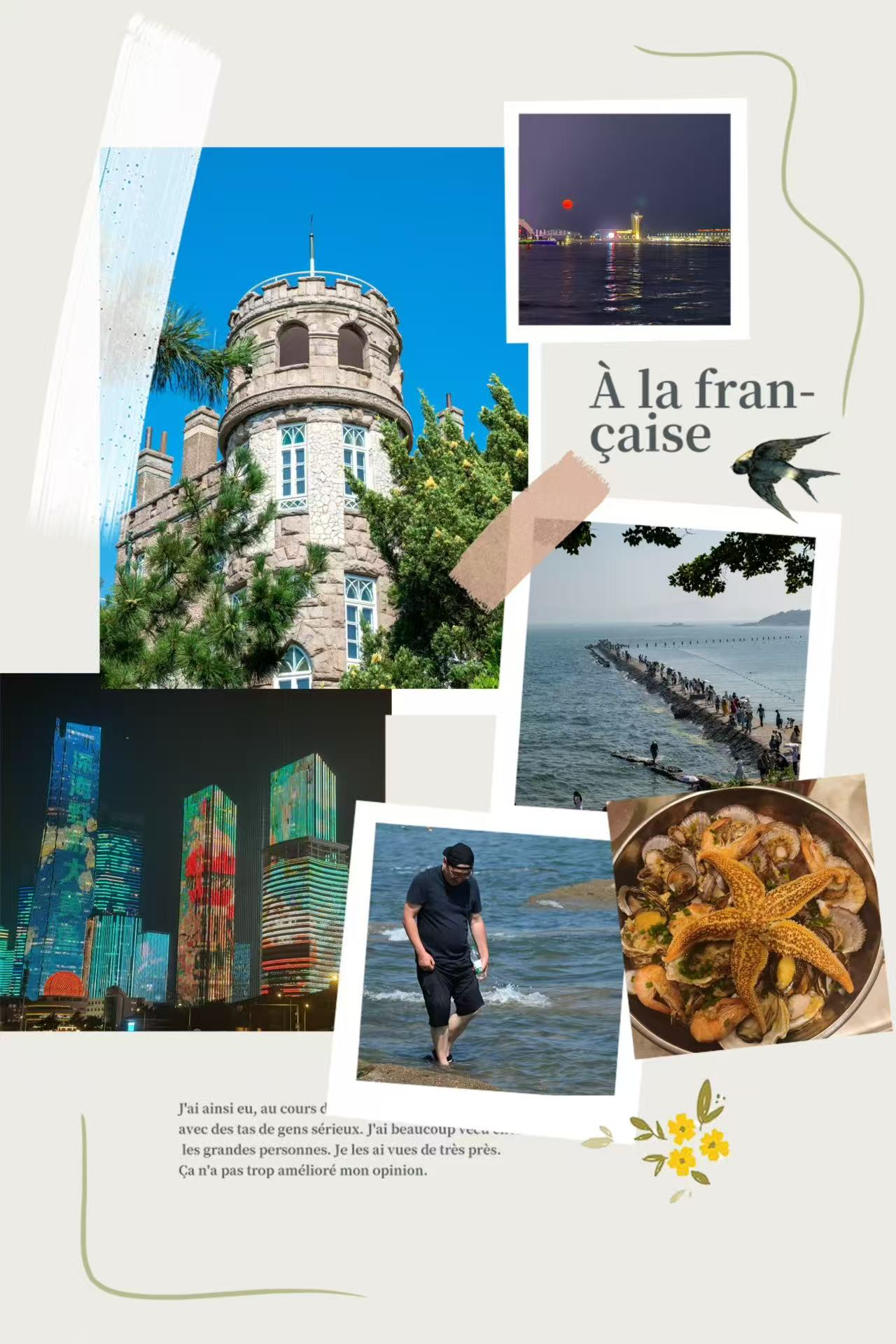
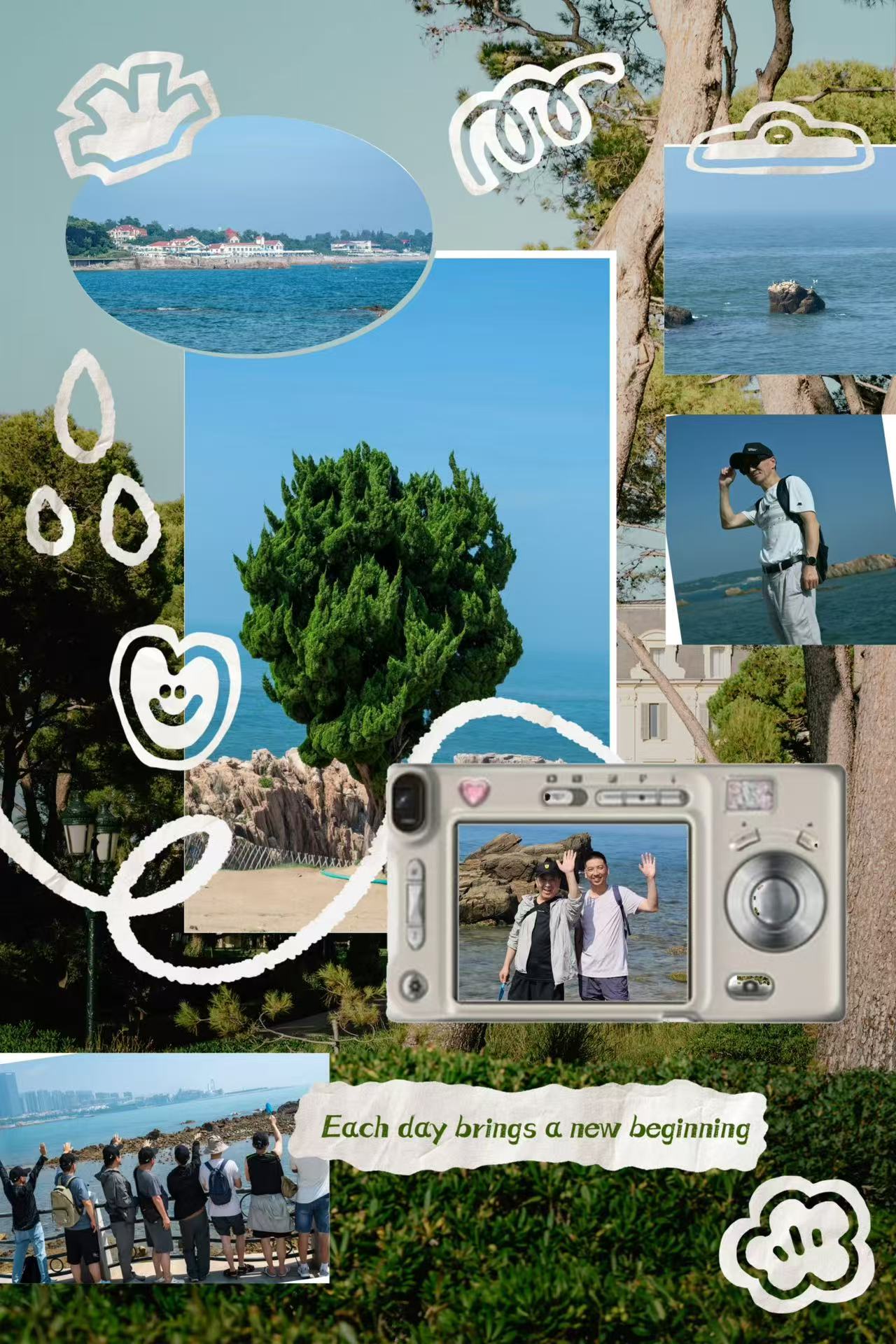
The second day – from the sea to beer. We went to Xiaomaidao early in the morning. A causeway connects the island to the mainland; the island has wide lawns and is surrounded by the sea on three sides. A “lonely tree” stood on the slope, with many people taking photos around it—but I found the crooked tree next to it more interesting, its branches twisting toward the sea as if greeting the waves. Lying on the grass, I watched the clouds scudding quickly overhead and seagulls gliding by. Walking around the island, I saw people gathering shellfish on the red‑rock beach, and little crabs scuttling between the stones—I crouched and watched for so long I didn’t want to leave. Xiaomaidao moved at such a slow pace that I lost track of time, but glancing at the sun, I knew we had to move on.
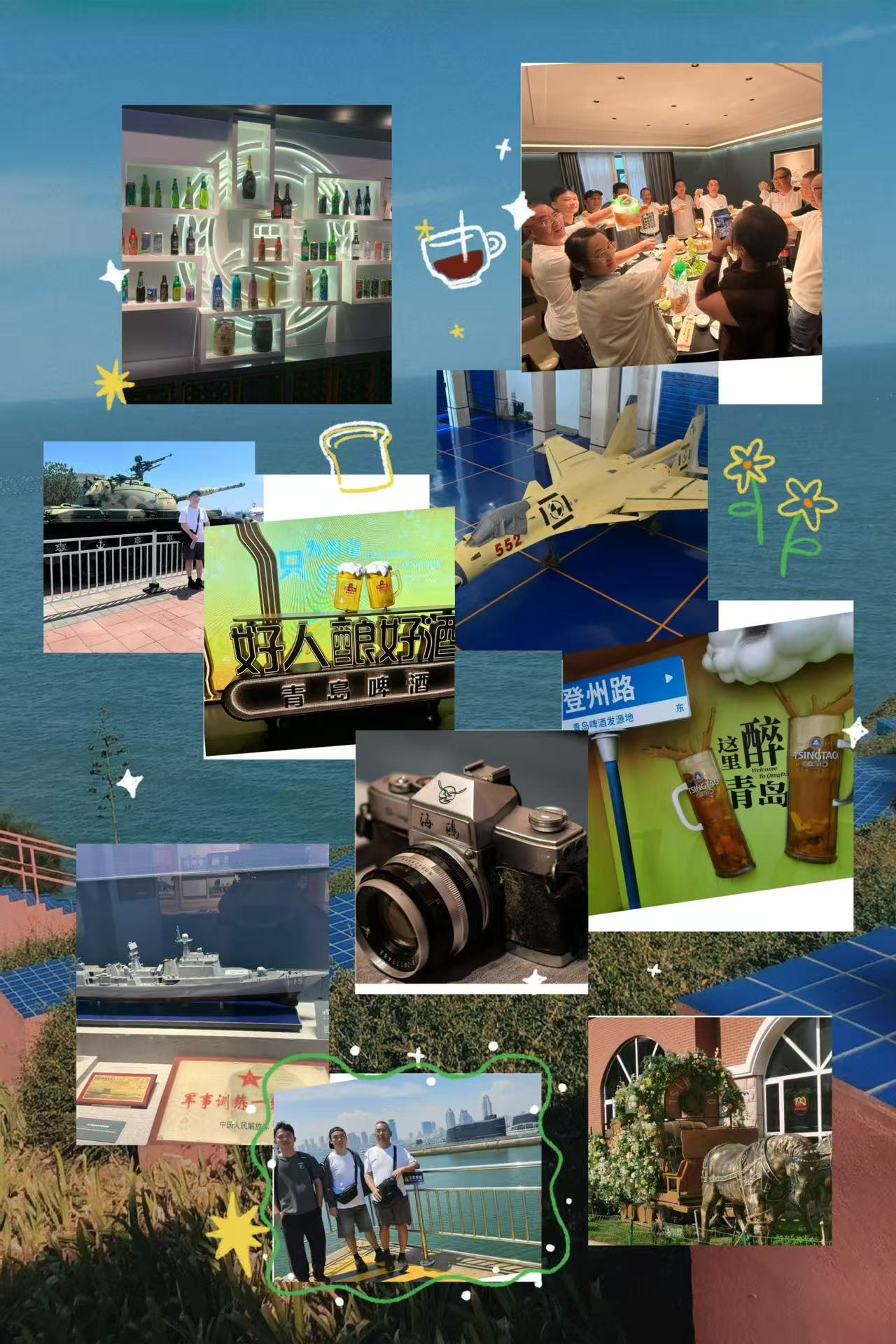
In the afternoon we visited the Naval Museum. We boarded a real decommissioned warship, touched its cool railings, and squeezed into the narrow cabins, imagining how the sailors lived and fought there. The compartments were crowded with pipes and tight spaces—it was hard to fathom how they held on in such conditions. Inside the exhibition hall, a massive nuclear submarine model, from torpedo tubes to the command center, stirred my blood. When we came out, the sunlight fell sharply on the ship’s bow emblem, gleaming blindingly.
No sooner had the adrenaline faded than the aroma of malt pulled us into another world—the Beer Museum was nearby. The old German factory building itself is a heritage site; the moment we stepped in, the scent of malt filled the air, a world away from the sea salt. Following the tour route, from century‑old brewing equipment to modern production lines, we felt like time‑travelers. What impressed me most was the huge fermentation tank area, lit up with a sci‑fi feel—the metal tanks reflecting warm yellow glows like silent giants. Finally, each of us was served a glass of unfiltered draft beer—golden, cloudy, with fine foam. One sip, and the rich malt flavor burst through—this was the true taste of Tsingtao beer. With a small pack of peanuts, I sat at the counter and savored it slowly, feeling the day was complete. Lightly tipsy, I walked back to the hotel with a brisker step.
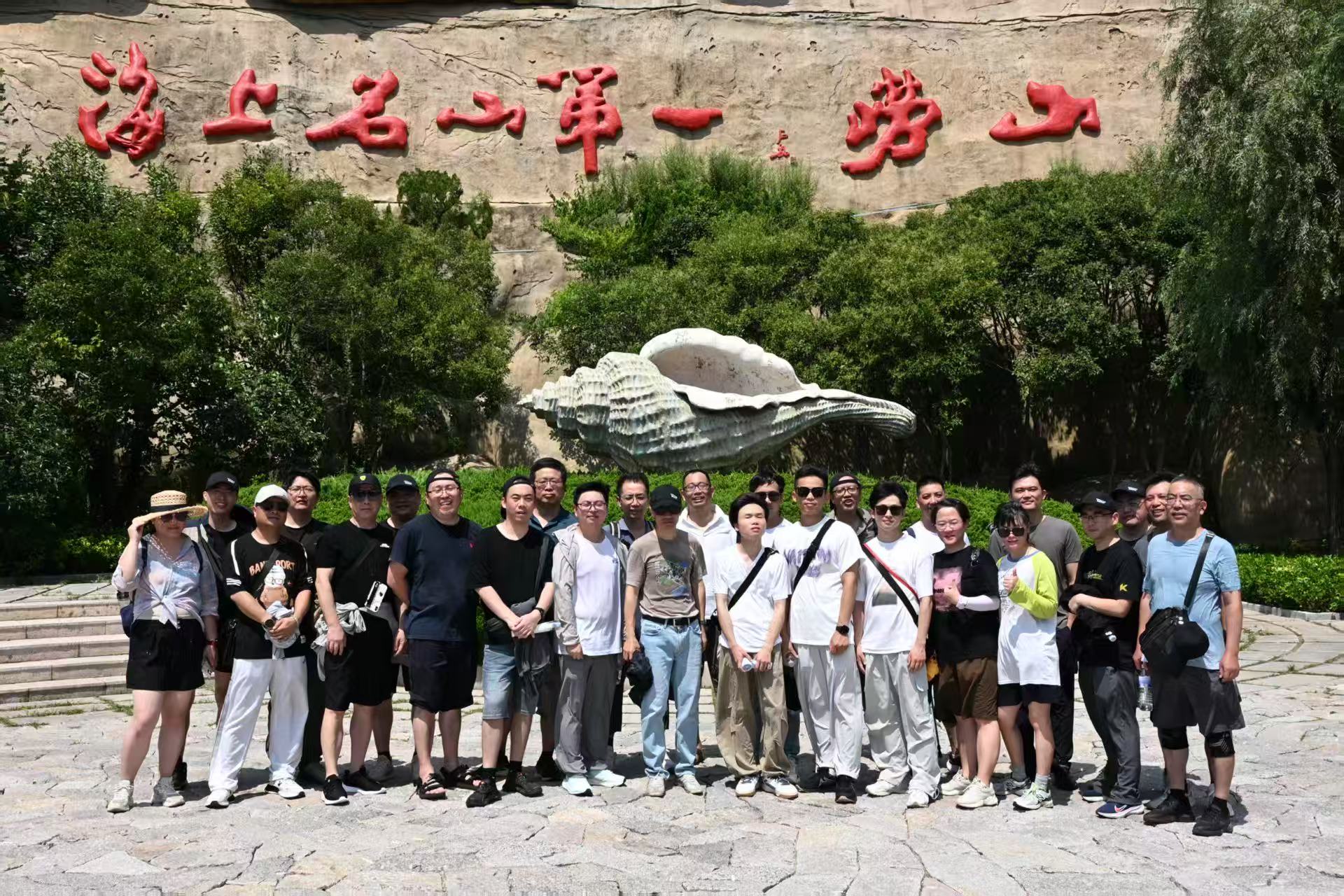
The third day – mountains, sea, and city views. Laoshan was the grand finale. We took a shuttle bus from the visitor center up the mountain, then hiked a section. Ancient trees lined the paths, and incense smoke curled around the Taiqing Palace, said to be an important site of the Quanzhen sect of Taoism. Looking far from the heights, the sea lay right at the foot of the mountain—a majestic meeting of mountain and ocean rarely seen elsewhere. The upturned eaves of the Taoist temple peeked through the greenery, and the distant sea sparkled in the sunlight. I suddenly understood why the ancients chose to cultivate themselves here—in such a landscape, one cannot help but feel reverence. My legs trembled on the way down, but my heart was light—truly, the “famous mountain by the sea” lived up to its name.
Yan’erdao Park was just right for the afternoon. Small but exquisite, its seaside boardwalk winds along the cliffs, with steep rocks on one side and the blue sea on the other. From the high spots, I watched waves crash against the reefs, shattering into white foam as if edging the sea with lace. Some people were fishing, others sitting on rocks reading—so leisurely that I leaned on the railing for a long time, feeling like part of the picture myself.
Stepping out of Yan’erdao’s tranquility, we went to the Olympic Sailing Center, where the masts in the marina stood thick as a forest. Walking along the promenade to the lighthouse, I looked back at the city skyline—the silhouettes of high‑rises looked modern, a striking contrast to the red tiles of the old town. Our last stop was May Fourth Square. The sculpture “Wind of May” glowed even redder in the twilight, like a burning flame, its spiraling upward lines as if about to ignite the sky.
The three‑day itinerary was packed, yet it never felt rushed. Qingdao is a city that combines the refinement of the old European‑style town, the grandeur of mountains and sea, and the lively, earthy charm of beer and seafood—each element a chapter of its own, yet all echoing one another, like a melody with a pleasing rhythm.
As we left, catching the train, the sunset over the Jiaozhou Bay Bridge spilled across the entire sea from the window. The bridge stretched far into the distance; the setting sun dyed everything in gold and red, and the waves broke into a million shards of light beneath the bridge piers. I leaned against the window and watched for a long time, thinking: Qingdao, until next time.